Image

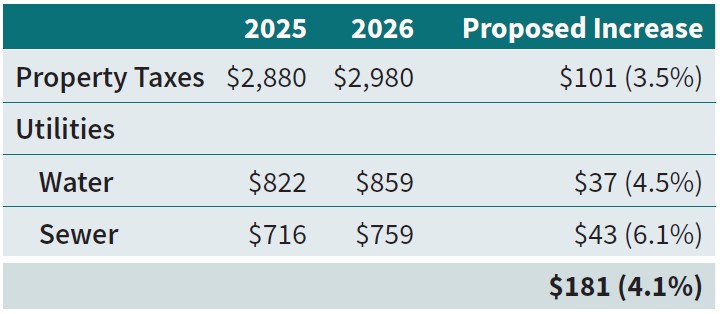
On May 12, 2026, Council adopted the 2026-2030 Financial Plan Bylaw, and Property Tax Rate Bylaw. This provides for a 3.5% tax increase and invests in key priorities: keeping our community safe, reducing traffic congestion, attracting business; and expanding recreation programs.
Learn more in the Council Report at MapleRidge.ca/CouncilMeetings.
Thank you to those who participated in our budget engagement process. Please see the Community Engagement section below for details and a summary of results for engagement phase 1 and 2.
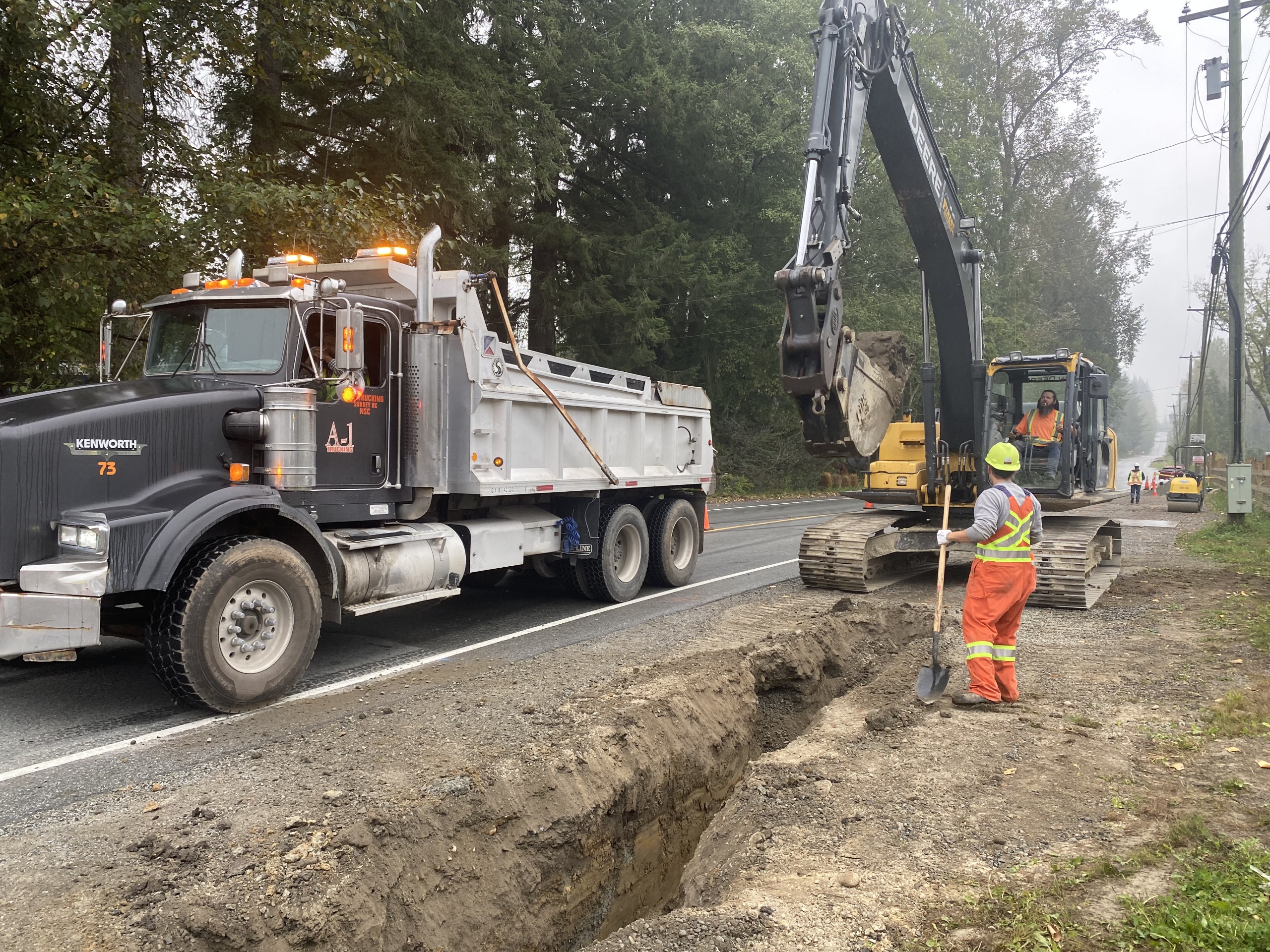
With a rapidly growing population and increasing costs to maintain facilities and infrastructure, the City's 2026 budget allocates spending to address these challenges and meet key objectives including:
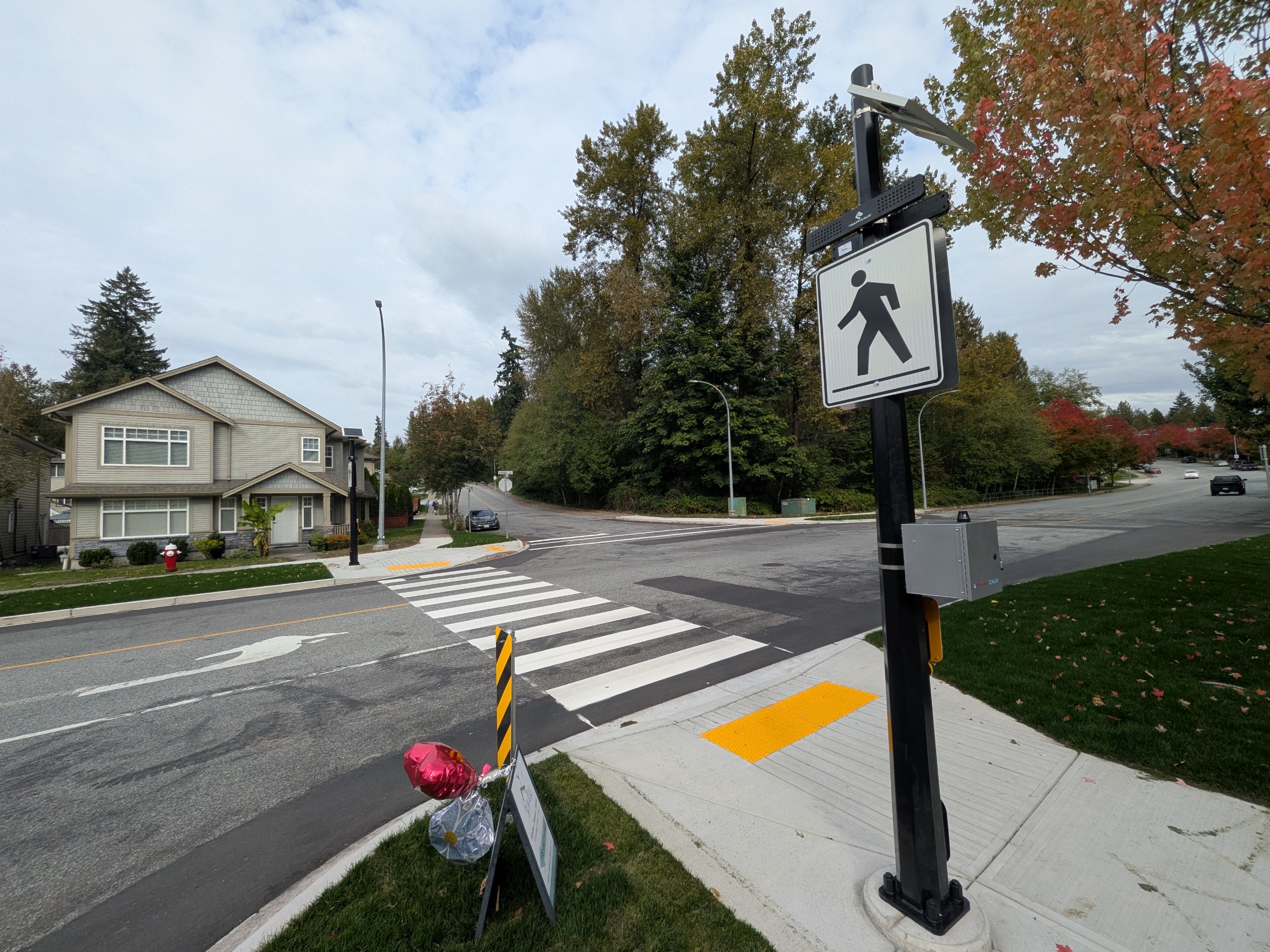
In our Fall 2025 Community Survey, we heard from Maple Ridge residents what matters most to them. Here are some examples of how the City is addressing those priorities.
Details regarding the 2026 Budget are provided below. A pdf version of the 2026 Budget Highlights document that was mailed to all Maple Ridge residences is available in the Learn
More section on this page.
At a Special Council Meeting on February 17, Council directed staff to proceed with public engagement on the proposed 2026–2030 Financial Plan, including a proposed 2026 property tax increase of 3.5 per cent (approx. $101 for a property assessed at that average value for Maple Ridge of $1.04 million).
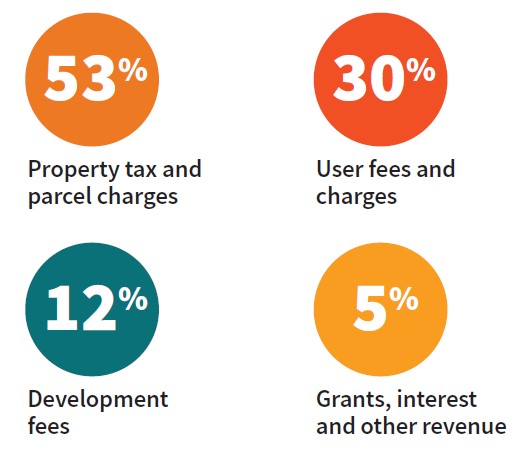
The city pays for the services it delivers on behalf of residents by obtaining funding from multiple sources. The four main ways revenue is generated to fund services and infrastructure are; property taxes, user fees and charges, development fees, and grants, interest and other revenues.
We are working hard to diversify our tax base and reduce the burden on residential property tax by attracting and growing businesses here.
The proposed budget is affected by a number of cost pressures.
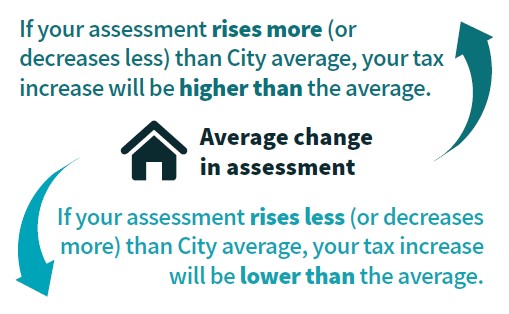
A property’s assessed value determines the portion of taxes payable on that property. Each January, BC Assessment releases updated assessments showing how much property values Maple Ridge have risen or fallen compared to the previous year. If the assessed value of an individual property has changed more or less than the average assessed value for Maple Ridge, its tax increase or decrease may differ.
Reduced projected revenue from lower-than-anticipated property value assessments impacted the City's 2026 budget.
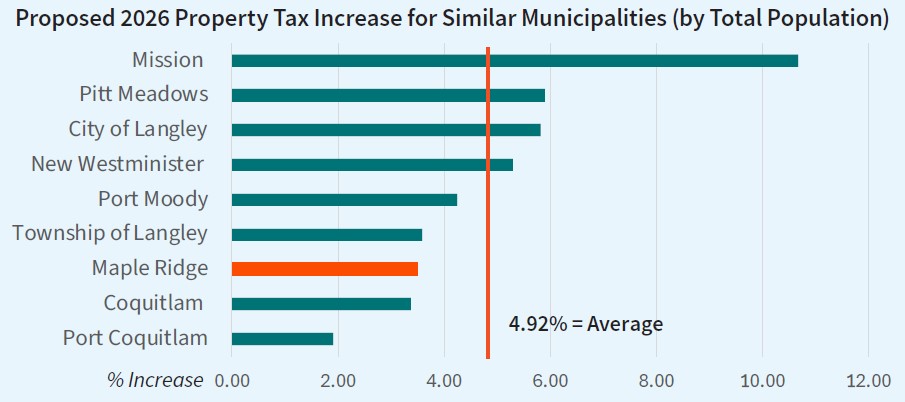
The factors that influence the 2026 property tax increase are different for each municipality. Each municipality has different infrastructure needs, geographical challenges and populations. In the following charts and tables, indicative comparisons are shown of tax increases for nearby municipalities that have similar population sizes and growth rates to Maple Ridge. Some of these municipalities include utility levies in their tax notices and some bill these separately.
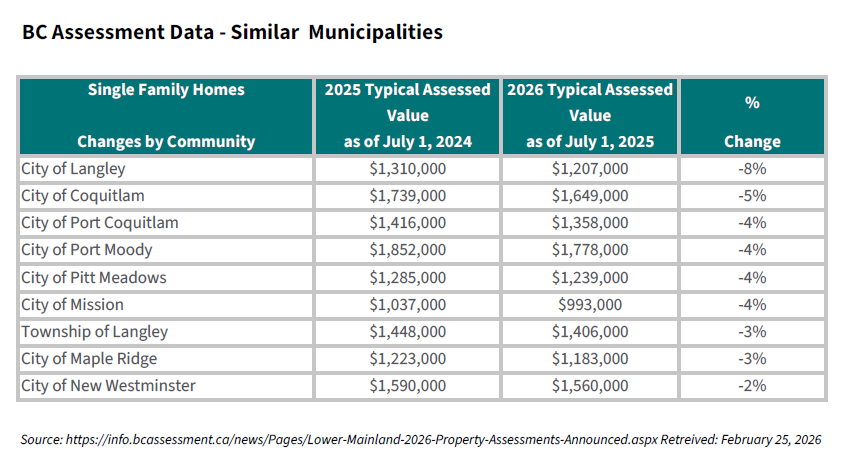
The impact of these property tax increases is greatly influenced by changing average property assessments each year in the community. This table shows the BC Assessment data and the average percentage change in assessed value for single detached homes in these communities.
Using these data, it's possible to estimate the dollar impact of property tax increases across similar municipalities. This table shows the average tax owing for municipal taxes (excludes other levies and charges) for a single detached home, for each municipality in 2025. Based on their published property tax increases it then estimates the dollar amounts in average municipal property taxes for 2026.
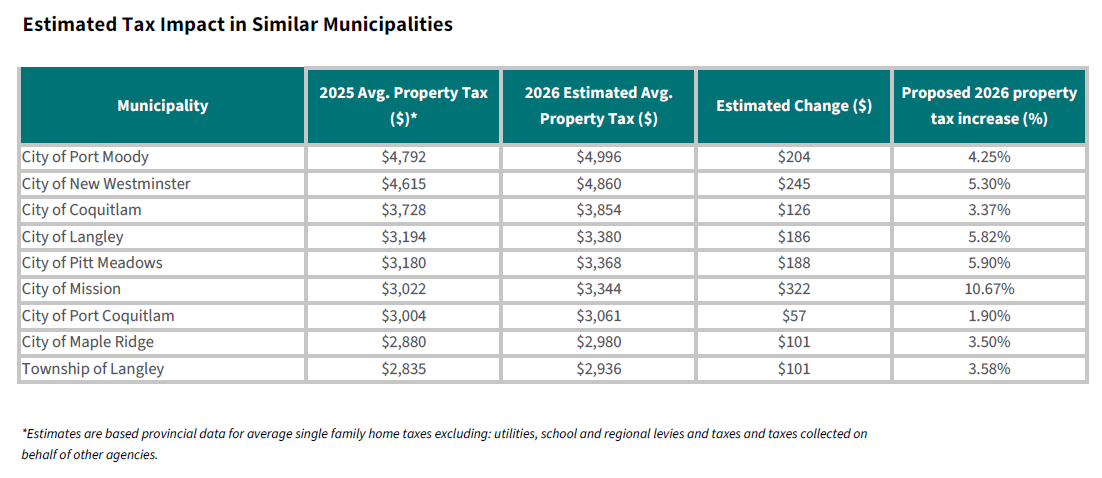
These dollar values are estimates only based on averaged data sets and may differ from individual tax assessments for Maple Ridge residents due to the complicated calculations involved.
Each year the City uses revenue from property taxes and other funding sources to pay for the infrastructure, programs and services that our residents rely on every day.
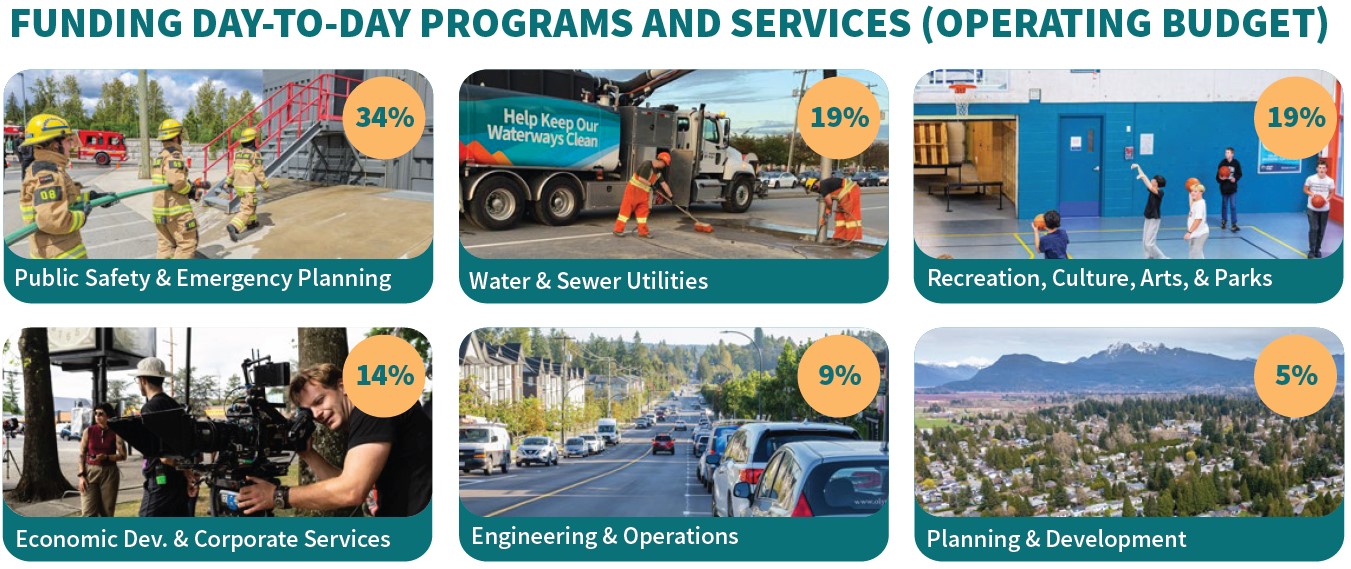
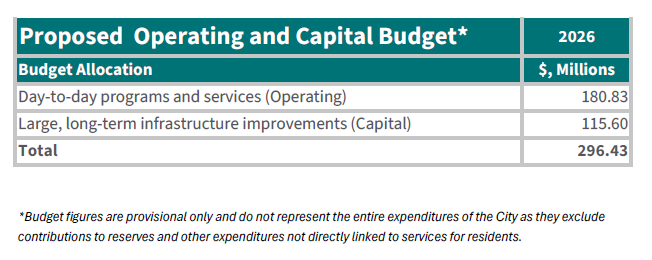
Total operating budget investments in 2026 for day-to-day programs and services (e.g., recreation programs, maintenance of facilities and parks and roads etc.) is $180.83 million.
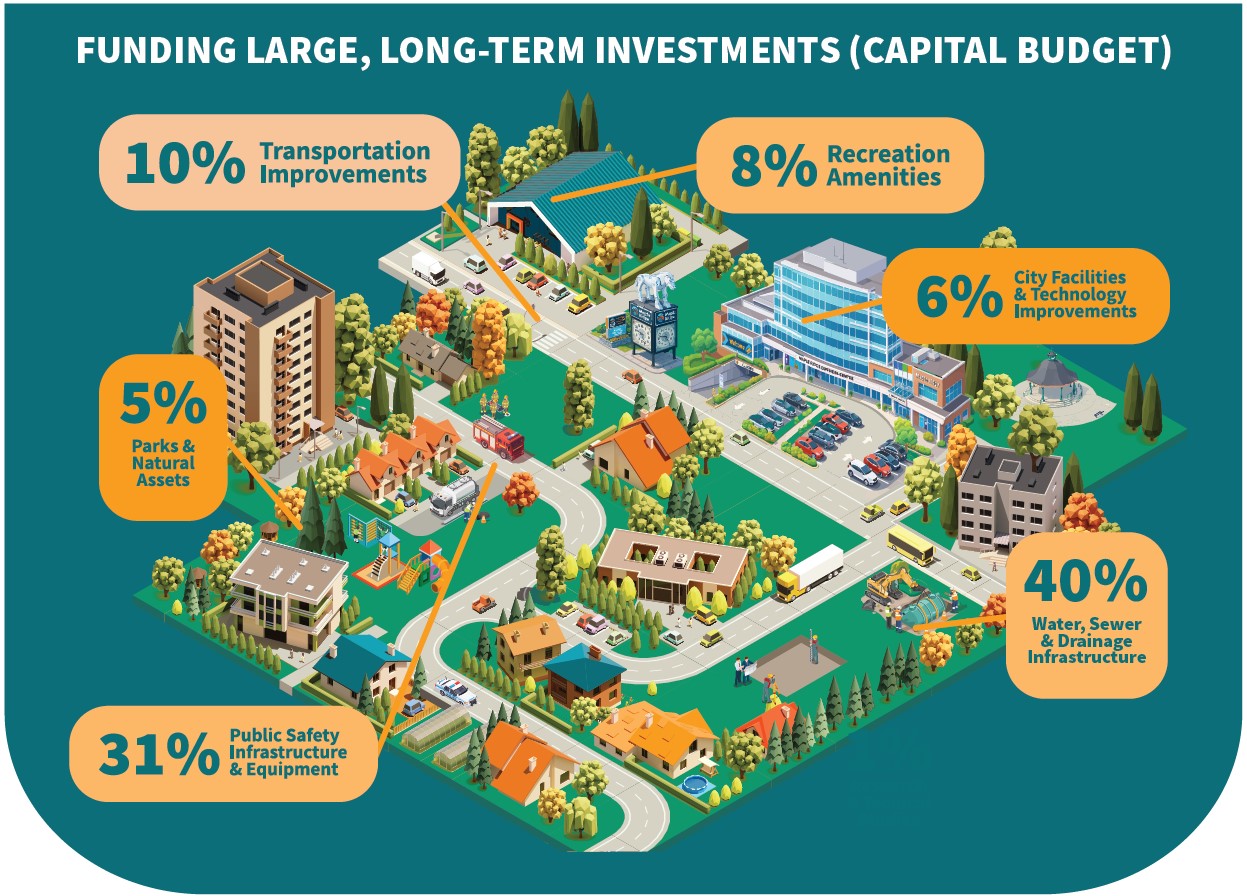
Total capital budget investments in 2026 for large, long-term infrastructure maintenance and improvements and priority capital projects is $115.6 million.
In 2026 the projected total budget for both day to day programs and services (Operating Budget) and large long-term investments (Capital Budget) is $296.43 million.
Visit MapleRidge.ca/Capital for full details.
The graphic shows the proposed amount and the relative share of the operating budget for each area of city operations in the draft 2026 budget. The investments in day-to-day programs, services and staffing respond to the demand from residents based on feedback we’ve received throughout multiple engagements during 2025 and from the Community Survey in Fall 2025.
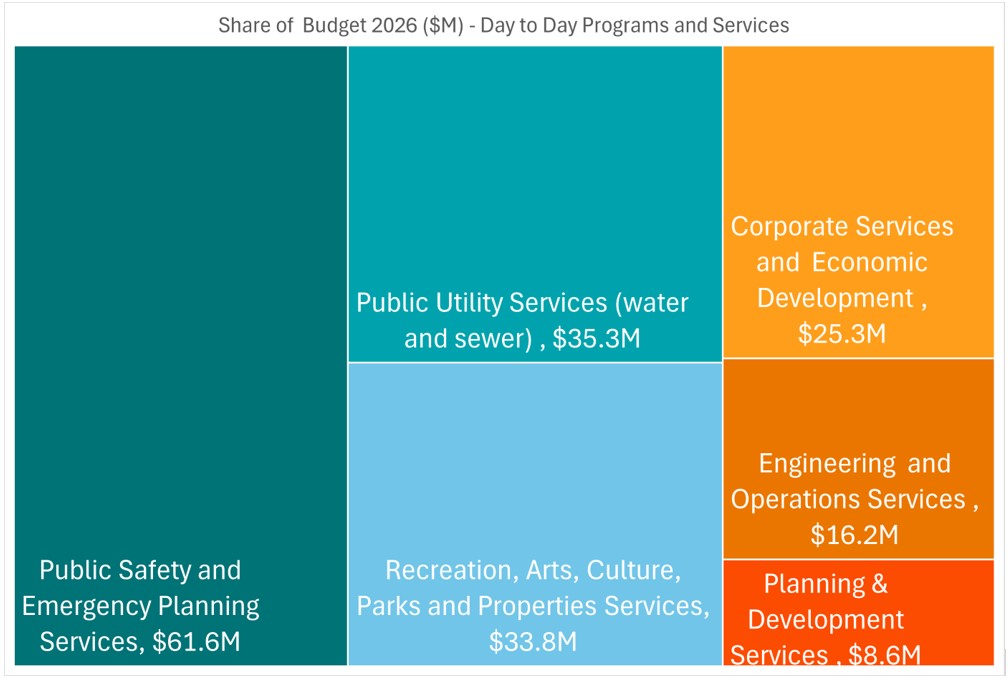
These numbers will continue to be adjusted as the financial year end actual expenses are finalized and further input is received from the community on the budget priorities we’ve outlined.
At the end of each year, any surplus funds received that were not expended are either carried forward into the next year (if the work is still ongoing) or reallocated to new projects.
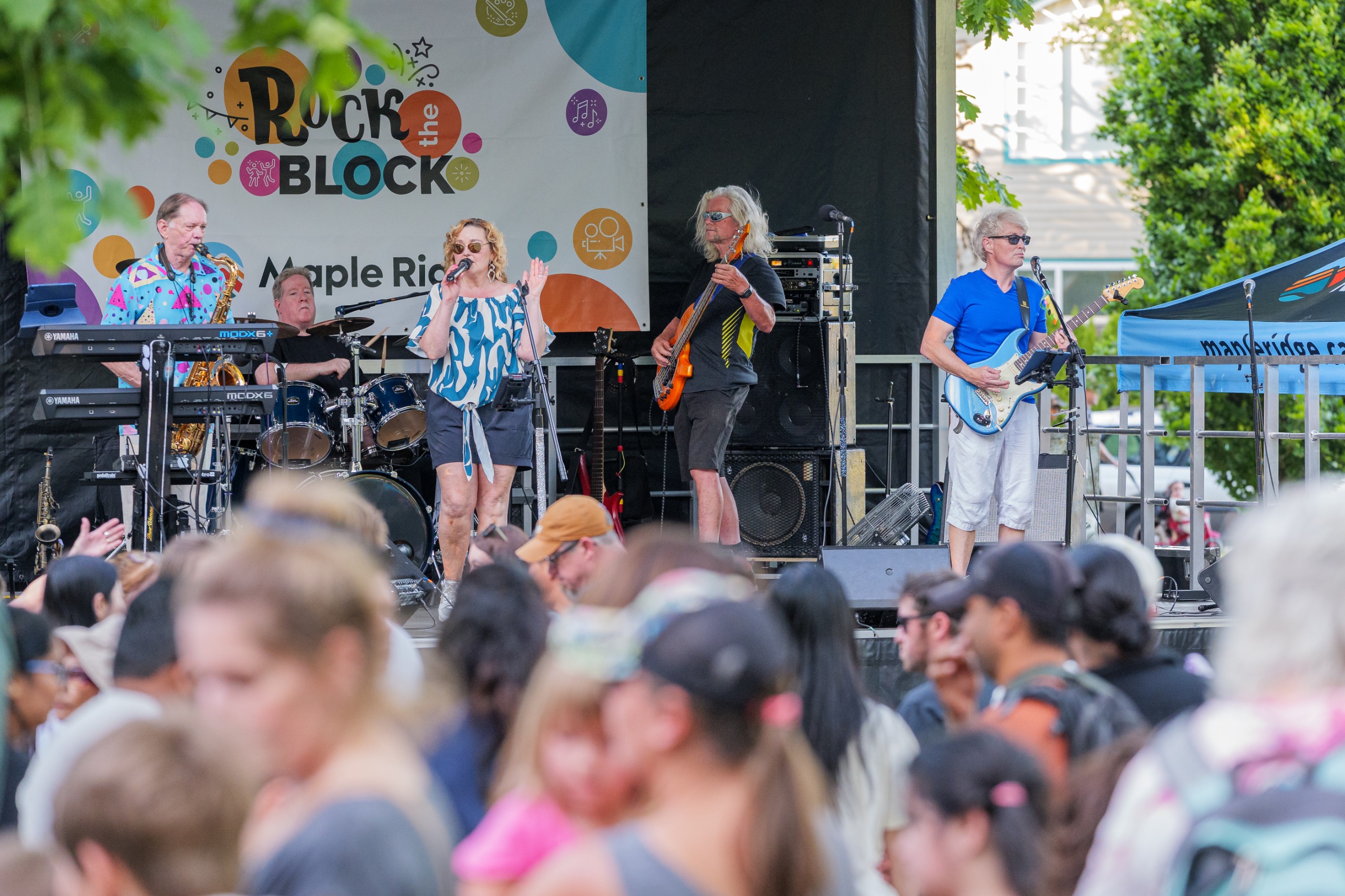
In December 2025 Council approved the use of surplus funds on a one-time basis to fund expansion of the City’s community events, enhanced traffic safety measures, developing community evacuation plans to support emergency preparation, and additional research and studies to support future planning.
For a full list of expenditures approved on a one-time basis using budget surplus from 2025 visit the Learn More section on this page.
On December 15, 2025 Council approved the 2026-30 Capital Plan that focuses on getting infrastructure built, supporting growth, and delivering the core services residents rely on, while minimizing impacts on taxes.
One-time priority projects were also approved, funded by surplus from 2025, grants, and reserves, aligning with Council’s strategic priorities, and having no direct impact on this year’s tax rate.
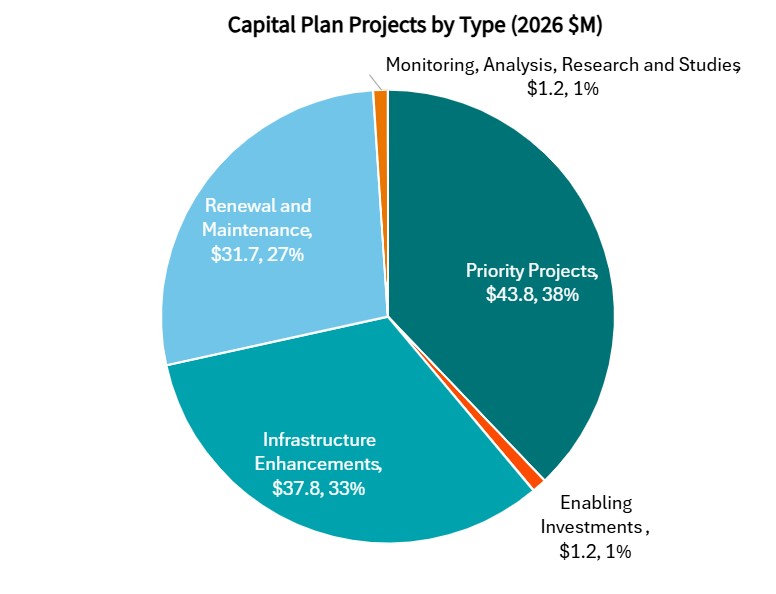
In 2026, the City has provided more detail on the specific projects and types of investments underway and a full list of all capital investments is included in the Learn More section on this page.
Learn more about the annual business planning and budget process at MapleRidge.ca/Budget.
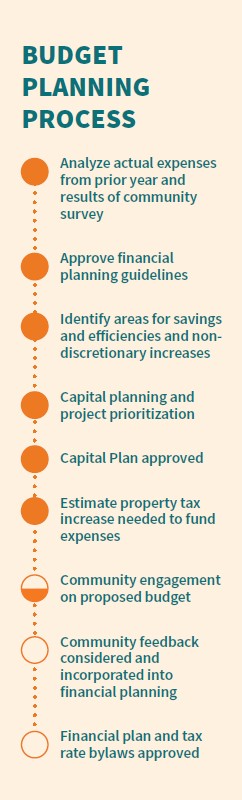
Inviting feedback from the community is an important part of our annual budget planning process. Thank you to those who participated in the 2026 budget process.
Feedback on the budget can be provided at any time by email at Budget@MapleRidge.ca, voicemail at 604-467-7484, or mail to Trevor Thompson, Director of Finance, City of Maple Ridge, 11995 Haney Place, Maple Ridge, BC V2X 6A9.
Results of the independent 2025 Community Survey were presented to Council on January 27, 2026. Conducted by Earnscliffe and Leger in October–November 2025, there were 711 surveys submitted from residents and business owners. Results were then weighted by age and gender to reflect Maple Ridge’s population.
Engagement Level: The engagement for this phase of the project is at the "involve" level of the International Association for Public Participation's (IAP2) Spectrum of Public Participation. This means that we will work directly with the public throughout the process to ensure that public concerns and aspirations are consistently understood and considered.
Thank you to everyone who shared their feedback on the proposed 2026 budget.
Congratulations to our prize draw winner of a $150 gift card from the Downtown Business Improvement Association (valid at over 90 local businesses).
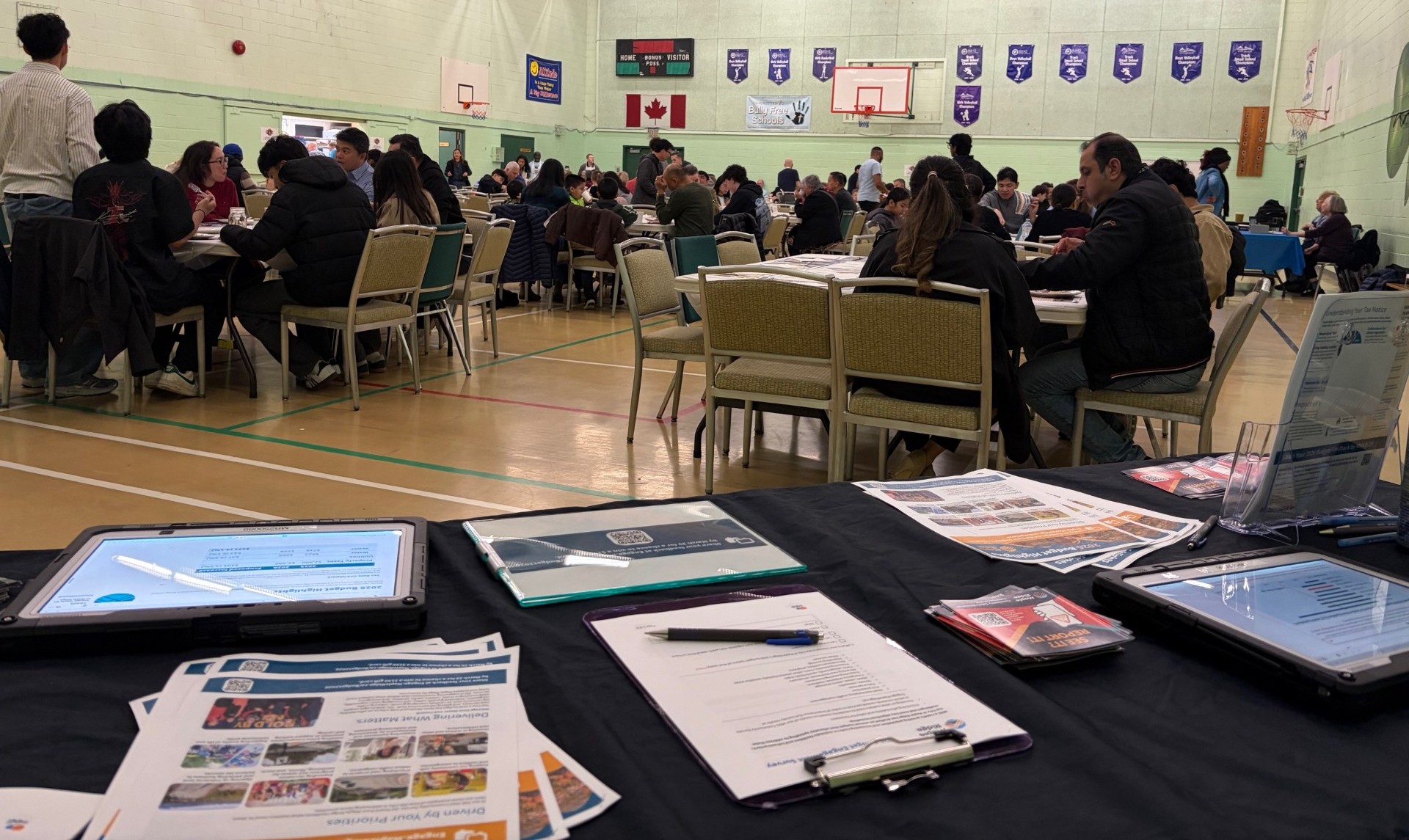
Feb 24 - Mar 29, 2026: Residents and businesses were invited to learn more about the proposed budget and provide feedback through:
Engagement Results:
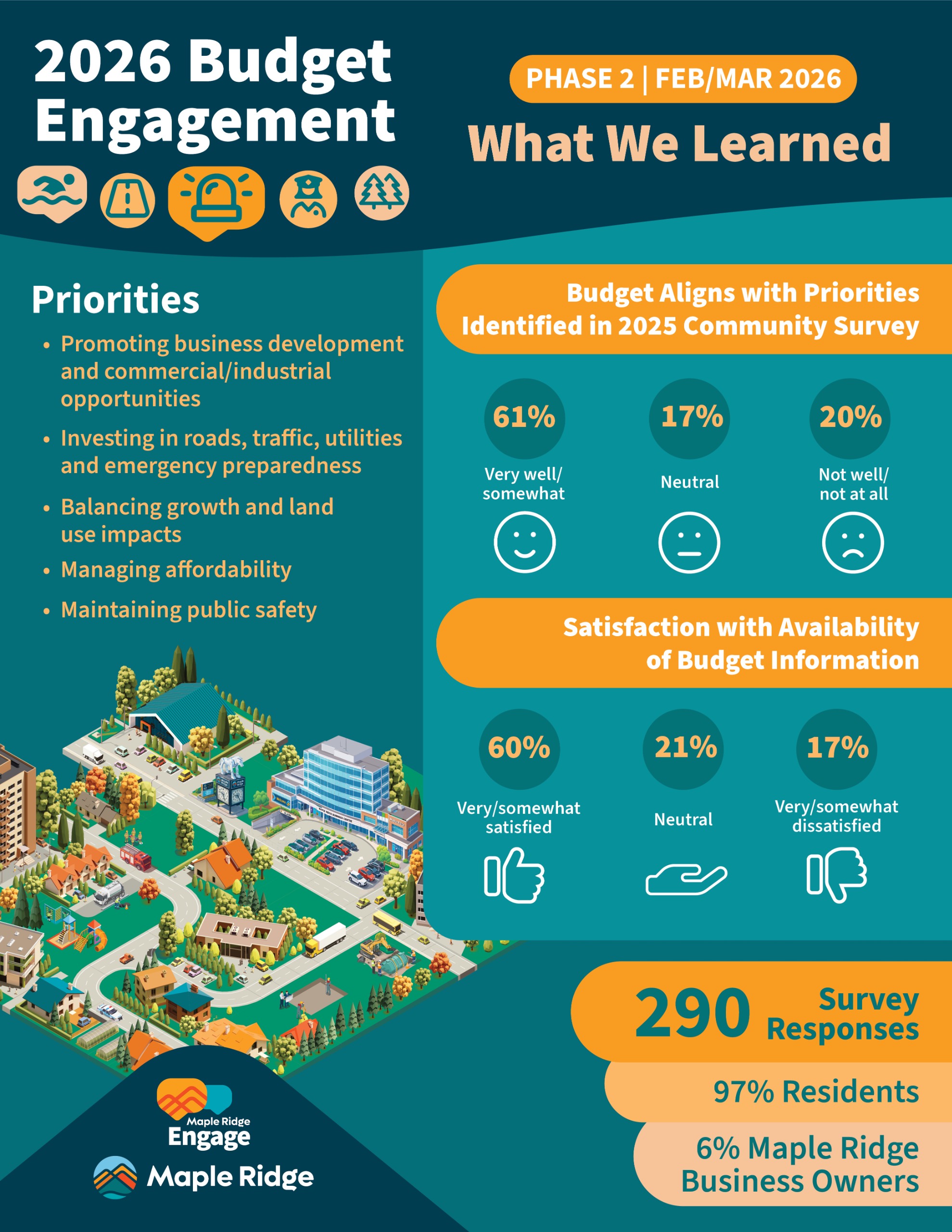
Approximately two-thirds of respondents said the budget reflects resident priorities identified in the Fall 2025 Community Survey, and a similar percentage were satisfied with the budget information the City provided this year.
The top priorities identified were affordability, public safety, infrastructure and transportation, economic development, and managing growth responsibly.
Graphic Summary:
Engagement Level: The engagement for this phase of the project is at the "consult" level of the International Association for Public Participation's (IAP2) Spectrum of Public Participation. This means that we will obtain public feedback on analysis, alternatives and/or decisions.
Spring 2026: The approved 2026 budget and 2026 - 2030 Financial Plan will be shared.
Development of the 2026-2030 Financial Plan (2026 Budget) started in July 2025 with the approval of the 2026 Business Planning Guidelines. The focus of the 2026 Budget will be on affordability and delivering the essential services our community relies on every day and have identified through our previous public engagement.
Initial engagement to invite input on budget priorities was done through the 2025 Community Survey in Oct - Nov 2025 to help align department budgets with service levels set by Council and build a strategic workplan to deliver on Council's priorities. These components all contribute to the development of the five-year Financial Plan.
On Dec 15 Council deliberated on the 2026-30 capital plan and one-time priority projects. One-time priority projects are funded by surplus, grants, and reserves, align with Council’s strategic priorities, and have no direct tax impact.
From Feb 25 - Mar 29 the community was invited to review and provide feedback on the proposed 2026 Budget.
There is an automatic translation tool available at the top-right of this page. Languages include: Traditional Chinese [繁體中文] Simplified Chinese [简体中文] Punjabi [ਪੰਜਾਬੀ], Filipino [Tagalog], Vietnamese [Tiếng Việt], French [Français], Korean [한국어], Japanese [日本語] Spanish [Español] and more.
Please Note: Google Translate is a third-party service and we cannot guarantee the quality or accuracy of the translated content. If you require additional support, email engage@mapleridge.ca.

Have questions or want to learn more about a project, contact us below:
| Website | www.mapleridge.ca/ |
|---|